What Is a Soil Profile Evaluation in Sonoma County?
Soil Profile Evaluation: Septic Planning in Sonoma County
A Soil Profile Evaluation is a critical first step in determining whether a property in Sonoma County can support a septic system (OWTS). Replacing the outdated term "pre-perc," this evaluation assesses soil depth and composition to help the Qualified Consultant and County decide on septic system viability and type—not size. It’s distinct from a percolation test and often required for new developments, replacement OWTS, and system expansions.
Key Takeaway
- Evaluates soil horizons to determine septic system suitability.
- Requires excavation of profile holes in the proposed system area.
- Minimum suitable soil depth determines system type and design options.
- Mandatory for expanding existing systems or installing new ones.
- May require additional wet weather groundwater testing.
Sonoma County requires a soil evaluation before approving an onsite septic system (OWTS). If you have researched septic permitting in the past, you may be familiar with the term “pre-perc.” That term is no longer used by the County of Sonoma. The process is now referred to as a Soil Profile Evaluation and documented in a Soil Profile Evaluation Report.
While the terminology has changed, the purpose of the evaluation has not. A Soil Profile Evaluation documents onsite soil conditions so the County can determine whether a property has septic potential and what type of system may be supported.
This evaluation is often confused with a percolation test. Although both involve soil investigation, they serve different purposes and are not interchangeable.
The County staff members no longer are onsite during these evaluations, so they can be scheduled quickly.
Soil Profile Evaluation vs Percolation Test
Both procedures collect soil related data for septic planning, but they answer different questions.
A percolation test measures how quickly water moves through soil. The test is performed by digging multiple test holes across a parcel and adding water over the course of several hours. The drop in water level is monitored and used to calculate a percolation rate. That rate is a major factor in determining the overall size of a proposed septic system. Percolation testing may be required depending on the project type, site conditions, and County review criteria.
A Soil Profile Evaluation focuses on soil depth and composition. Its purpose is to determine septic system suitability and system type rather than system size. In the case of developed lots with septic suitable soil, the Profile Hole Evaluation results are used to estimate system sizing parameters. The evaluation is performed by a Qualified Consultant and results documented in a Soil Profile Evaluation Report submitted for County review.
How a Soil Profile Evaluation Is Performed
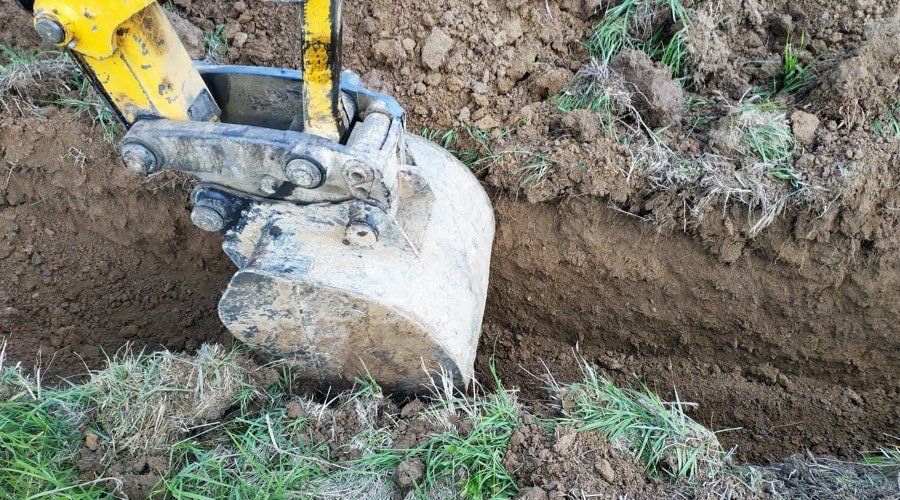
During a Soil Profile Evaluation, a backhoe or excavator is used to dig profile holes in the proposed septic system location and required reserve area. Each profile hole is excavated to allow observation of soil conditions from grade downward.
As each hole is excavated, soil depths and compositions are logged throughout the total depth of the excavation. The consultant documents changes in soil layers, referred to as horizons. Each horizon is measured and described based on observed soil characteristics.
These observations determine whether a site has septic potential and, if so, what types of septic systems the soil may support.
Soil Depth and Septic Potential
A minimum depth of suitable soil is required for a property to have septic potential. When only minimal suitable soil is present, system options may be limited and above ground systems such as mounds or at-grade systems with pretreatment may be required.
Greater depths of suitable soil allow for additional system options and more flexibility in design. Deeper suitable soils generally make it easier to design less expensive system types.
Expanding an Existing Septic System
A Soil Profile Evaluation may also be required when expanding an existing septic system to accommodate additional bedrooms or an accessory dwelling unit, particularly if no prior evaluation has been completed for the property.
Expanding older gravity trench based septic systems can be more challenging than designing a new system. Existing systems must meet current County soil depth criteria below the dispersal area, which often requires greater verified soil depth than was required at the time of original installation.
Groundwater Considerations
Mottling is a characteristic looked for in soils which can indicate potential seasonally high groundwater levels. Properties require additional wet weather groundwater determination testing when developing or expanding a septic system that proposed to use soils where mottling was observed. In some rare case additional testing is needed on flat sites with soils that don’t lend themselves to mottling. Groundwater conditions can affect system design and approval and are evaluated as part of the overall septic review process when required.
Working With BC Engineering Group
BC Engineering Group has completed Soil Profile Evaluations on hundreds of properties throughout Sonoma County. Our team handles all aspects of the process, including preparation of site exhibits, County submittals, coordination of excavation equipment, and onsite soil evaluation.
If you have questions about Soil Profile Evaluations or septic planning, contact BC Engineering Group at 707-542-4321. You can also explore additional septic and land planning topics on our blog.
Comments
You May Also Like